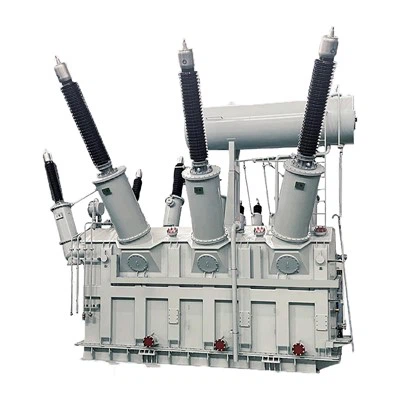
In the dynamic landscape of electrical power systems, substation transformers stand as crucial components, facilitating the efficient transmission and distribution of electricity. However, the advent of modern electrical equipment and non – linear loads has introduced a complex issue – harmonics. As a dedicated supplier of substation transformers, I’ve witnessed firsthand how harmonics can significantly impact these critical assets. Substation Transformer
Understanding Harmonics
Before delving into their impact, it’s essential to understand what harmonics are. In a pure electrical sine wave, the voltage and current oscillate at a fundamental frequency, typically 50 or 60 Hz depending on the region. However, non – linear loads such as variable frequency drives, rectifiers, and electronic ballasts distort this pure sine wave. These distortions occur at integer multiples of the fundamental frequency and are known as harmonics. For example, the 3rd harmonic has a frequency three times that of the fundamental frequency, the 5th harmonic has a frequency five times the fundamental, and so on.
The presence of harmonics in the electrical system can stem from a variety of sources. Industrial facilities often use a large number of adjustable – speed drives and other power electronics, which are significant sources of harmonics. In commercial buildings, the widespread use of energy – efficient lighting systems with electronic ballasts and office equipment like computers and printers also contribute to harmonic pollution. Even in residential areas, the growing number of household appliances with power – electronic components adds to the harmonic load.
Impact on Transformer Losses
One of the most direct impacts of harmonics on substation transformers is an increase in losses. Transformers have two main types of losses: copper losses and iron losses. Copper losses are due to the resistance of the transformer windings and are proportional to the square of the current flowing through them. When harmonics are present, the effective current in the windings increases. This is because the root – mean – square (RMS) value of the distorted current, which includes harmonics, is higher than that of the pure fundamental – frequency current. As a result, the copper losses (I²R losses) in the transformer windings increase significantly.
Iron losses, on the other hand, are composed of hysteresis and eddy – current losses in the transformer core. Harmonics can increase both types of iron losses. The higher – frequency harmonics cause more rapid changes in the magnetic field within the core, leading to an increase in hysteresis losses. Additionally, the skin effect becomes more pronounced at higher frequencies. The skin effect causes the current to concentrate near the surface of the conductor, effectively increasing the resistance of the windings. This, in turn, leads to an increase in eddy – current losses.
The increase in losses due to harmonics not only reduces the efficiency of the transformer but also causes it to generate more heat. Over time, excessive heat can damage the insulation materials in the transformer, leading to reduced service life and an increased risk of failure.
Thermal Stress and Aging
The additional heat generated by the increased losses due to harmonics subjects the transformer to thermal stress. Transformers are designed to operate within a certain temperature range. When harmonics cause the temperature to rise above this range, it accelerates the aging process of the insulation materials.
The insulation in a transformer is typically made of materials such as paper and oil. High temperatures can cause the paper insulation to become brittle and crack, reducing its dielectric strength. This can lead to partial discharges and eventually to insulation breakdown. The oil in the transformer also degrades at high temperatures, losing its insulating and cooling properties.
As a transformer ages prematurely due to harmonic – induced thermal stress, it may require more frequent maintenance and replacement. This can result in significant costs for power utilities and industrial users. Moreover, unexpected transformer failures can lead to power outages, causing disruptions to industrial processes, commercial operations, and even daily life for consumers.
Voltage Distortion
Harmonics can also cause voltage distortion in the electrical system. When the current flowing through the transformer contains harmonics, the impedance of the transformer causes a voltage drop across it at each harmonic frequency. This results in a distorted voltage waveform at the transformer output.
Voltage distortion can have a cascading effect on other electrical equipment connected to the same system. Sensitive electronic devices, such as computers and communication equipment, are particularly vulnerable to voltage distortion. It can cause malfunctions, data corruption, and premature failure of these devices. In industrial settings, voltage distortion can affect the performance of motor drives, leading to reduced efficiency, increased wear and tear, and even mechanical damage to the connected machinery.
Neutral Conductor Overloading
In three – phase four – wire systems, the presence of triplen harmonics (3rd, 9th, 15th, etc.) can cause overloading of the neutral conductor. In a balanced three – phase system without harmonics, the currents in the three phases cancel each other out in the neutral conductor, resulting in a very low neutral current. However, triplen harmonics in the three phases are in – phase with each other. This means that instead of canceling out, they add up in the neutral conductor.
As a result, the neutral conductor may carry a current that is significantly higher than its rated capacity. Overloading of the neutral conductor can lead to overheating, insulation damage, and even electrical fires. In substation transformers, this can also affect the internal winding configurations and lead to additional stress on the transformer structure.
Mitigating the Impact of Harmonics
As a substation transformer supplier, we understand the importance of mitigating the impact of harmonics on our products. There are several strategies that can be employed to reduce harmonic distortion in the electrical system.
One approach is to use harmonic filters. Passive harmonic filters consist of capacitors, inductors, and resistors connected in various configurations to form resonant circuits. These filters are designed to provide a low – impedance path for specific harmonic frequencies, thus diverting the harmonic currents away from the transformer and other electrical equipment. Active harmonic filters, on the other hand, use power electronics to inject compensatory currents into the system that are equal in magnitude but opposite in phase to the harmonic currents, effectively canceling them out.
Another strategy is to select transformers that are designed to withstand harmonics. Some transformers are built with larger conductor sizes to reduce copper losses at higher harmonic currents. Additionally, the core materials of these transformers may be optimized to reduce the impact of harmonic – induced iron losses.
Proper system design and load management can also help mitigate the impact of harmonics. This includes separating non – linear loads from linear loads and using dedicated feeders for high – harmonic loads. Regular monitoring of the electrical system for harmonic levels can also allow for early detection of problems and timely implementation of corrective measures.
Conclusion

Harmonics pose a significant challenge to substation transformers, affecting their efficiency, reliability, and service life. As a substation transformer supplier, we are committed to providing our customers with high – quality transformers that can withstand the effects of harmonics. Our team of experts understands the complex nature of harmonic issues and can work with customers to develop tailored solutions.
Structural Transformer If you’re in the market for substation transformers and are concerned about the impact of harmonics on your electrical system, we’d love to have a conversation with you. Our experienced staff can provide in – depth advice on transformer selection, harmonic mitigation strategies, and overall system design. Don’t let harmonics compromise the performance of your electrical infrastructure. Reach out to us today to start a discussion about how we can meet your transformer needs.
References
- Arrillaga, J., & Watson, N. R. (2003). Power system harmonics. John Wiley & Sons.
- Crolla, D. A. (2012). Electrical power systems: EDITION 2. Elsevier.
- Greenwood, A. (1991). Electrical transients in power systems. John Wiley & Sons.
Nantong Yawei New Energy Technology Co., Ltd.
As one of the most professional substation transformer manufacturers and suppliers in China, we’re featured by quality products and good service. Please rest assured to wholesale durable substation transformer made in China here from our factory. Customized orders are welcome.
Address: Room 28-101, Building 27 and 28, No.333 Kaiyuan Avenue, Sunzhuang Subdistrict, Hai’an City, Nantong City, Jiangsu Province, China
E-mail: admin@nantongyawei.com
WebSite: https://www.nantongyawei.com/
