Evaluating the manufacturability of complex parts is a critical process that can significantly impact the success of a project. As a supplier of complex parts, I have encountered numerous challenges and opportunities in this area. In this blog, I will share my insights and experiences on how to effectively evaluate the manufacturability of complex parts. Complex Parts
Understanding the Basics of Manufacturability
Before delving into the evaluation process, it is essential to understand what manufacturability means. Manufacturability refers to the ease with which a part can be manufactured, taking into account factors such as design, materials, production processes, and cost. A highly manufacturable part is one that can be produced efficiently, with minimal waste, and at a reasonable cost.
Key Factors in Evaluating Manufacturability
1. Design Complexity
The design of a complex part is one of the most critical factors in evaluating its manufacturability. Complex designs with intricate features, tight tolerances, and thin walls can be challenging to manufacture. When evaluating the design, it is important to consider the following aspects:
- Feature Compatibility: Ensure that the features of the part are compatible with the chosen manufacturing processes. For example, some features may require specialized machining operations or unique tooling.
- Tolerances: Tight tolerances can increase the difficulty and cost of manufacturing. It is important to determine if the specified tolerances are necessary for the part’s function. If not, relaxing the tolerances can improve manufacturability.
- Geometric Complexity: Highly complex geometries, such as curved surfaces or internal channels, may require advanced manufacturing techniques like 5 – axis machining or additive manufacturing.
2. Material Selection
The choice of material has a significant impact on the manufacturability of a complex part. Different materials have different properties, such as hardness, ductility, and machinability. When selecting a material, consider the following:
- Workability: Some materials are easier to machine, form, or weld than others. For example, aluminum is generally more machinable than stainless steel.
- Material Availability: Ensure that the selected material is readily available in the required quantity and quality. Limited availability can lead to production delays and increased costs.
- Cost – Performance Balance: Evaluate the cost of the material against its performance requirements. In some cases, a more expensive material may be necessary to meet the part’s function, but in other cases, a more cost – effective alternative can be found.
3. Manufacturing Processes
Selecting the appropriate manufacturing processes is crucial for ensuring the manufacturability of complex parts. There are various manufacturing processes available, including machining, casting, forging, and additive manufacturing. When evaluating manufacturing processes, consider the following:
- Process Capability: Each manufacturing process has its own capabilities and limitations. For example, machining can achieve high precision but may be limited in terms of the complexity of the part. Casting, on the other hand, can produce complex shapes but may have lower dimensional accuracy.
- Production Volume: The production volume can influence the choice of manufacturing process. High – volume production may require more automated and cost – effective processes, while low – volume production may be better suited for more flexible processes like additive manufacturing.
- Process Integration: In some cases, multiple manufacturing processes may need to be integrated to produce a complex part. Ensure that the selected processes can be effectively integrated without causing significant production delays or quality issues.
4. Cost Analysis
Cost is an important consideration in evaluating the manufacturability of complex parts. A comprehensive cost analysis should include the following elements:
- Material Cost: As mentioned earlier, the cost of the material can vary significantly depending on the type and quantity.
- Manufacturing Cost: This includes the cost of labor, equipment, tooling, and overhead. Different manufacturing processes have different cost structures, so it is important to compare the costs of various options.
- Quality Control Cost: Ensuring the quality of complex parts may require additional inspection and testing, which can add to the overall cost.
The Evaluation Process
1. Review the Design
The first step in evaluating the manufacturability of a complex part is to thoroughly review the design. This involves analyzing the geometry, dimensions, tolerances, and surface finish requirements. If there are any features that are likely to cause manufacturing difficulties, it is important to communicate with the design team to explore potential design modifications.
2. Select the Materials
Based on the design requirements and performance specifications, select the appropriate materials. Consider the material’s properties, availability, and cost. If necessary, conduct material tests to ensure that the selected material meets the requirements.
3. Choose the Manufacturing Processes
Evaluate the available manufacturing processes and select the most suitable ones based on the design, material, and production volume. Consider the process capabilities, cost, and lead time. In some cases, it may be beneficial to use a combination of processes.
4. Conduct a Cost Analysis
Develop a detailed cost analysis for each manufacturing option. Include the cost of materials, labor, equipment, tooling, and quality control. Compare the costs of different options to determine the most cost – effective solution.
5. Evaluate the Risks
Identify potential risks associated with the manufacturing process, such as quality issues, production delays, and cost overruns. Develop risk mitigation strategies to minimize the impact of these risks.
Case Studies
To illustrate the importance of evaluating the manufacturability of complex parts, let’s look at a few case studies.
Case Study 1: Aerospace Component
A customer approached us with a design for an aerospace component. The design had very tight tolerances and complex internal channels. After a thorough evaluation, we determined that traditional machining processes would be very difficult and costly to achieve the required precision. We recommended using additive manufacturing, which allowed us to produce the part with the required accuracy and in a shorter lead time. By evaluating the manufacturability early in the process, we were able to provide a cost – effective solution for the customer.
Case Study 2: Automotive Part
A client needed a complex automotive part with a high – volume production requirement. The initial design had some features that were difficult to manufacture using traditional stamping processes. We worked with the design team to modify the design slightly, improving its manufacturability. We also implemented a more automated stamping process, which reduced the cost per part and increased the production efficiency.
Conclusion
Evaluating the manufacturability of complex parts is a multi – faceted process that requires careful consideration of design, materials, manufacturing processes, and cost. By following a systematic evaluation process and leveraging our expertise, we can provide our customers with high – quality, cost – effective solutions.
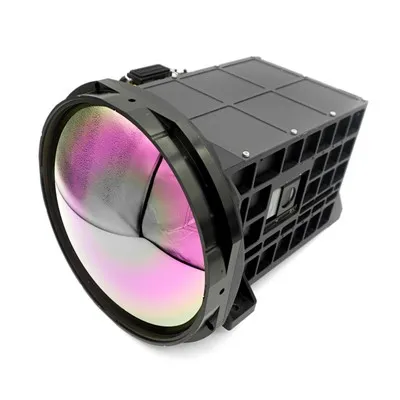
MWIR Thermal Imager 640 If you are in the market for complex parts and are looking for a reliable supplier, we would love to have a conversation with you. Our team of experts can help you evaluate the manufacturability of your parts and provide you with the best manufacturing solutions. Contact us to start a productive discussion about your procurement needs.
References
- Boothroyd, G., Dewhurst, P., & Knight, W. A. (2002). Product Design for Manufacture and Assembly. Marcel Dekker.
- Kalpakjian, S., & Schmid, S. R. (2013). Manufacturing Engineering and Technology. Pearson.
- Wohlers, T. (2017). Wohlers Report 2017: 3D Printing and Additive Manufacturing State of the Industry. Wohlers Associates.
Xi’an Zhongke Lead Ir-Tech Co., Ltd.
We are one of the most experienced complex parts manufacturers in China, specialized in providing high quality OEM products with the industrial grade. We warmly welcome you to wholesale high performance complex parts at an affordable price from our factory.
Address: Building 8,Hard Technology Enterprise Community No.3000,Biyuan 2nd Rd,High-Tech Zone Xi’an,Shaanxi,China
E-mail: sales@lead-ir.com
WebSite: https://www.leadinfrared.com/
